Coaching is equipping people with the tools, knowledge, and opportunities they need to develop themselves and become more effective.

David Peterson, PhD Psychology, University of Minnesota.

Take a look at the materials below to learn what coaching components look like in real life and what questions you need to be asking to help guide others to be more effective.
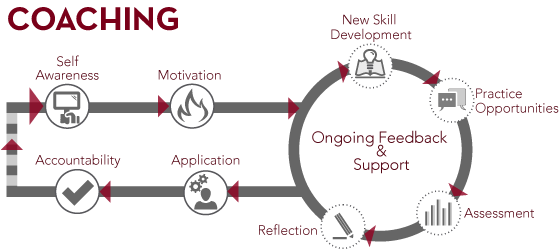
Coaching model title=

1. Read the Introductory Article

When it comes to employee development, coaching is equipping people with the tools, knowledge, and opportunities they need to develop themselves and become more effective.

Coaching helps employees apply the feedback they have received to be more successful in reaching their objectives.  As a supervisor, you are expected to provide development coaching on a regular basis because it will help people reach their highest level of performance, realize their potential, and stay engaged in their work, which is something you definitely want!

So when is coaching most effective? It’s when self-awareness, motivation, ongoing feedback and support, application, and accountability align and result in sustained growth. Great coaching begins with asking the right open-ended questions.

Self-Awareness
Does the person have the self-awareness to learn from coaching? Can they identify and accurately describe their skills, knowledge and abilities? Do they know their areas of opportunity? And can they describe how others perceive them? If the answer is no to most of these questions, help the individual assess their areas of strengths and opportunities. This can be as simple as having a conversation, sharing your observations, and encouraging the person to get feedback from peers. If the answer is yes, then development coaching can be effective, especially when an individual can discuss these issues without getting defensive.

Motivation
What about the person’s motivation to change? Do they see what’s in it for them if they make a change? When someone is hard working and is willing to put time and effort into growing skills and performance, it’s a good sign that they are motivated. If they do not give up when they make a mistake or run into problems, they are likely to be motivated to try new things. Motivation is essential for development, so if the person is unmotivated, help them see why putting in the time and energy is worth it. You can do this by connecting development to a person’s goals,  helping them see how their work fits into the broader vision and mission, and supporting their confidence that they can improve.

Ongoing Feedback and Support
Next, does the person know what skills they need to learn in order to improve? Ongoing coaching requires that the person has access to the content they need to learn. Do they need specific training? Would they benefit from mentoring, from observing others, or learning from a colleague? Participating in a Community of Practice? Taking a course? The key is being intentional and creative about connecting them with the resources available and helping them see how the new skills will benefit their work.

As a supervisor, what else can you do to help your employees improve? Be their coach and mentor! Research shows that there are five types of tools that coaches can use to help employees achieve their goals. These tools include providing feedback, advice, and encouragement; teaching employees new skills or helping them perfect existing skills,  role playing or rehearsing new behaviors, reflecting on past events and journaling, recommending readings  and discussing performance within the context of coaching goals.

Application
Providing opportunities to practice and master skills is the next step in talent development. Will the person be able to apply the learning on the job?  How can the person apply new and improved skills through day-to-day work? What special projects or assignments will allow an opportunity for them to practice? How can you ensure they have room for making some mistakes as they practice and learn?

Accountability
Finally, supporting an employee in their development includes recognizing improvement, rewarding success, and holding them accountable if the improvement doesn’t take place.  For an individual, consider - what incentives will be meaningful? Do they prefer public recognition? A simple “thank you”? Are they looking for promotional or leadership opportunities? What are the consequences if they do not improve and develop?

Self awareness, motivation, ongoing feedback and supportcontent, application and accountabilitydevelopment support are all essential to an effective coaching process. Equipping your team with tools, knowledge, and opportunities they need to develop themselves and become more effective is not an easy task, but it is a key part of being a successful supervisor. Use the resources presented in this module to help you in this important work. 

2. Review the Quick Guide to Coaching

  • What does self-awareness look like?
  • How to improve employee motivation?
  • What tools can I use to help my employees achieve thier goals?

3. Apply - check what you have learned so far

Coaching people to be more effective is no easy task. Work though some questions and examples to see if you learned how to focus your effort and make the coaching process more effective.

Downloads

Want to dig deeper?

The science behind Feedback and Coaching - materials curated for you by our Leadership and Talent Development team.